
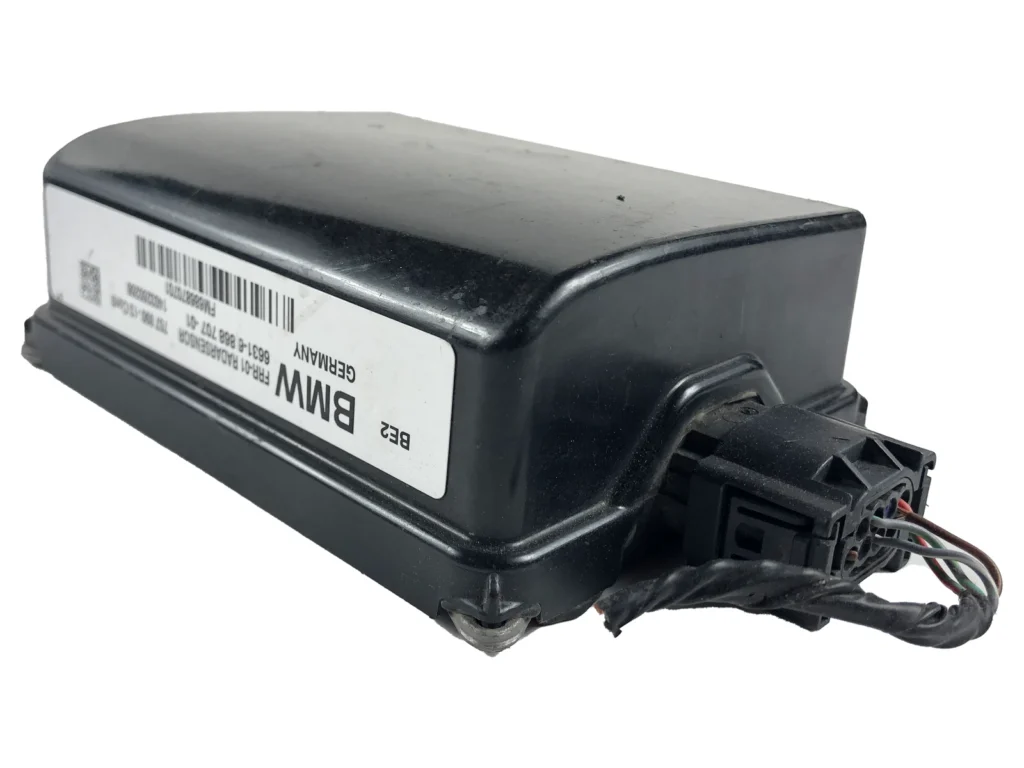
Walk into any auto parts store and you’ll face the same pitch: aftermarket parts are “just as good” as OEM, at half the price. It sounds logical. It’s often wrong.
This isn’t about brand loyalty. It’s about engineering tolerances, material grades, and what happens when a part that’s 2mm out of spec meets 60mph highway vibration for 40,000 miles.
What Does “OEM” Actually Mean?
OEM stands for Original Equipment Manufacturer. An OEM part is the exact component your vehicle was built with at the factory — same supplier, same specification, same quality control process. When a manufacturer installs a climate control module or ECM, that part is manufactured to tolerances measured in fractions of a millimetre, tested against that specific vehicle’s electrical architecture, and validated for 10+ years of service life.
Aftermarket manufacturers reverse-engineer those parts. They measure the original, design something similar, and produce it at scale using cheaper materials and looser tolerances. Sometimes the result is fine. Often, it isn’t.
The Three Areas Where Aftermarket Parts Fail
1. Electrical Compatibility
Modern vehicles are rolling computers. An ECM module, a steering column switch, or a navigation unit communicates with dozens of other modules over a CAN bus network. An aftermarket replacement may pass basic function tests but fail when the vehicle’s software queries it for version data, VIN binding, or calibration parameters. The result: error codes, reduced functionality, or complete rejection by the vehicle’s BCM.
2. Material Fatigue
OEM brackets, mounts, and housings are engineered from specific alloys chosen for their fatigue characteristics under that vehicle’s load cycles. An aftermarket equivalent cast from a cheaper alloy may look identical out of the box. After 18 months of thermal cycling, it cracks. Tail light assemblies and fuse box housings are common offenders.
3. Fitment
A part that’s 1.5mm narrower than spec might clip in. But “clips in” and “seals correctly” are different things. Water ingress, vibration rattle, and premature wear all trace back to fitment tolerances that an aftermarket supplier didn’t bother to hold.
Where Salvage-Sourced OEM Changes the Equation
A genuine OEM part removed from a low-mileage salvage vehicle is still the factory-spec component. It was built to the same standard as a new dealer part. It carries the same VIN compatibility. It fits with the same tolerances.
The difference is price. Dealer-new OEM commands a 200-400% markup over actual manufacturing cost. Salvage-sourced OEM — inspected, tested, and verified — delivers factory quality at a fraction of that price.
At Manvicon, every part we source goes through a multi-point inspection before it ships. We verify electrical function on all electronic components, check physical condition against OEM tolerances, and confirm fitment data against the vehicle’s original build specification.
How to Tell If You’re Getting Real OEM Quality
- Ask for the OEM part number. Every genuine OEM component carries the manufacturer’s part number. If a supplier can’t provide it, walk away.
- Check for VIN or build date compatibility. OEM parts are often model-year specific. A part from a 2015 vehicle may not be compatible with a 2013 build even if the exterior looks identical.
- Verify inspection records. A reputable supplier will tell you how the part was tested and what condition grade it carries.
The Bottom Line
Aftermarket parts have a place — for wear items like brake pads or filters where tolerances are forgiving. For electrical systems, structural components, and anything that interfaces with your vehicle’s software, OEM quality is not optional. It’s the difference between a repair that lasts and one you’ll redo in 18 months.
Browse Manvicon’s verified OEM inventory — every part sourced from inspected salvage, tested before it ships.