The dealer parts counter is not your only option for genuine OEM components. It’s just the most expensive one. Knowing how to identify, verify, and source the exact part your vehicle needs will save you hundreds — without compromising on quality.
Step 1: Decode Your VIN
Your Vehicle Identification Number is a 17-character code that contains your vehicle’s complete build specification. Every character means something: manufacturing plant, engine code, model year, body style, and production sequence.
Before searching for any part, locate your VIN (on the dashboard lower-left corner visible through the windscreen, or on the driver’s door jamb) and decode it using your manufacturer’s official VIN decoder or a free service like the NHTSA VIN decoder at nhtsa.gov.
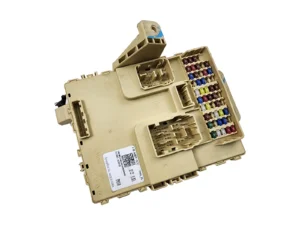
Why this matters: a 2017 Kia Sportage can have three different ECM configurations depending on engine size and market. Without decoding the VIN, you’re guessing.
Step 2: Find the OEM Part Number
Every component installed at the factory carries an OEM part number. This is the definitive identifier — more reliable than year/make/model searches, which often return multiple incompatible results.
Three ways to get the OEM part number:
- From the part itself. Most OEM components have the part number moulded or printed directly on the housing. Remove the old part and photograph every surface.
- From a dealer parts query. Call the parts department with your VIN. They can look up the exact part number without charging you. You’re not obligated to buy from them.
- From an OEM parts catalogue. Services like RockAuto, EPC-Data, or manufacturer-specific tools let you browse by VIN and export part numbers for free.
Step 3: Verify Supersession
OEM part numbers are revised when manufacturers update a component. The original number may have been superseded one or more times. Always check for the latest supersession before ordering — the current part number is what dealers and reputable suppliers stock.
Step 4: Check Application Compatibility
Even with the correct part number, confirm compatibility against your specific VIN before purchasing. Reputable suppliers — including Manvicon — verify fitment against build data before dispatch. If a supplier can’t confirm VIN compatibility, treat that as a red flag.
Step 5: Evaluate the Source
Once you have the part number, you have three purchasing options:
- Dealer new: 100% genuine, full warranty, 200-400% markup.
- New old stock (NOS): Genuine OEM parts that were never installed. Can be excellent value but verify storage conditions.
- Salvage-sourced OEM: Genuine factory parts removed from low-mileage vehicles, inspected and tested. Best value for electrical components, trim, and assemblies. This is Manvicon’s entire catalogue — every part verified against OEM spec before it ships.
The One Question to Always Ask
Before any purchase: “Can you confirm this part’s OEM part number and verify it against my VIN?” A supplier who can answer that question with confidence is a supplier you can trust.