
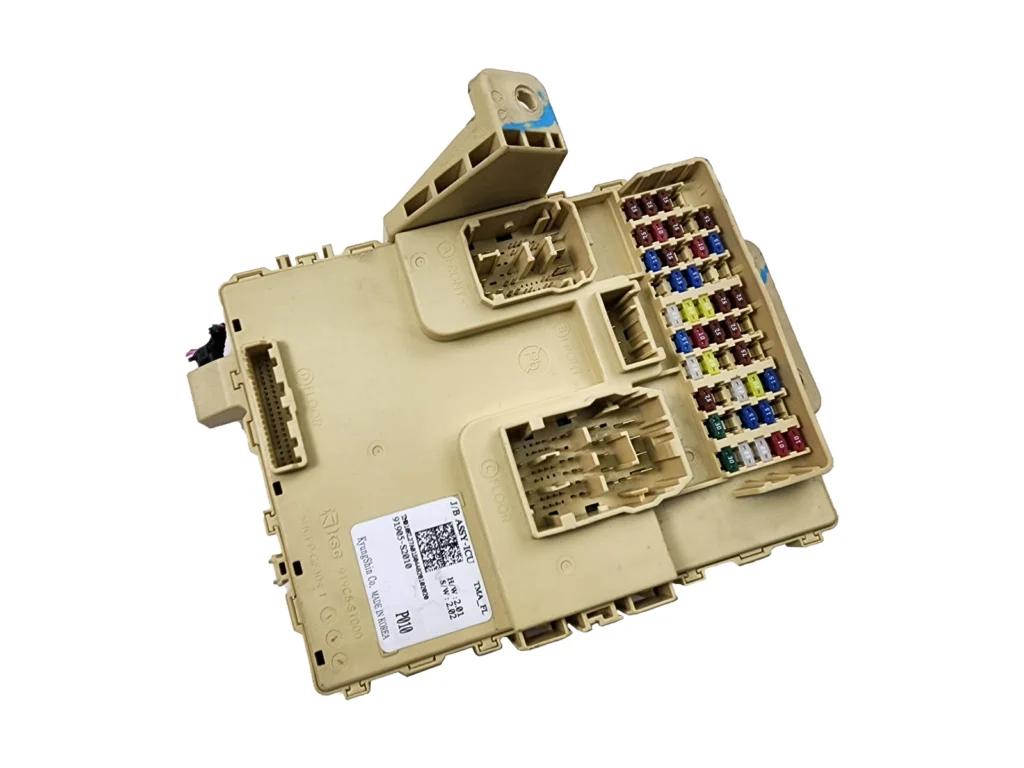
Blown fuses are normal. A fuse box that keeps blowing them, corrodes its contacts, or causes random electrical failures across unrelated systems — that’s a different problem entirely.
The fuse box (also called the power distribution centre or junction box) is one of the most overlooked components in vehicle electrical diagnosis. Here are five signs yours may need replacing, not just a fresh set of fuses.
1. Fuses Blow Repeatedly in the Same Circuit
A fuse blows once because of a momentary overload or a fault in the protected circuit. If you replace a fuse and it blows again within days or weeks — without any apparent change in how you’re using that circuit — the problem may not be the downstream load. Internal arcing within the fuse box can create resistance in the circuit that causes repeated overcurrent events even when the component the fuse protects is functioning normally.
Before assuming the component is faulty, inspect the fuse box terminals for darkening, melting, or deformation around the affected slot.
2. Visible Corrosion or Burning Inside the Box
Open your fuse box and look carefully at the terminal contacts. Light surface oxidation on older vehicles is normal. What you’re looking for is green or white corrosion buildup on the blade terminals, or — more seriously — brown or black discolouration around any slot, which indicates heat damage from arcing or overload.
A single burnt terminal can usually be cleaned or repaired. Multiple burnt terminals, or any sign of melted plastic inside the housing, means the box needs replacing. A compromised fuse box is a fire risk.
3. Multiple Unrelated Systems Failing Simultaneously
When your radio, interior lights, and window switches all misbehave at the same time, the temptation is to chase each fault separately. But these systems may share a common feed or ground path through the fuse box. A failing internal bus bar can cause intermittent faults across seemingly unrelated systems.
If your OBD-II scan returns U-codes (network communication errors) alongside unrelated body system faults, add the fuse box to your suspect list.
4. Intermittent Faults That Clear Themselves
Systems that work fine for a week, then fail, then work again — without any clear trigger — are often exhibiting classic thermal intermittent behaviour. As the fuse box heats up under load, a marginal internal connection expands and breaks contact. As it cools, contact restores. The fault disappears. Until next time.
These faults are notoriously difficult to replicate during diagnosis, which is why they’re often misattributed to sensors, switches, or modules that are actually functioning correctly.
5. The Box Has Physical Damage or Water Ingress
A fuse box exposed to water — from a failed cowl drain, a leaking sunroof, or a flooded footwell — is a fuse box with a limited lifespan. Even if it appears to work normally after drying out, mineral deposits left by evaporating water create conductive paths between terminals. The result is current leakage, phantom loads, and battery drain that gets worse over time.
Physical cracking of the housing, broken terminal clips, or a lid that no longer seals properly all allow moisture and debris ingress. If the box is physically compromised, replacement is the correct repair.
Sourcing a Replacement Fuse Box
Fuse box replacement is a straightforward DIY job on most vehicles — disconnect the battery, photograph every connection, unplug the harness connectors, swap the unit, reconnect in reverse. The critical factor is sourcing a genuine OEM replacement matched to your vehicle’s build spec.
Browse Manvicon’s OEM fuse box inventory — all units are inspected before dispatch, matched to year, make, model, and engine code.